
The Autoimmune Testing Department at Dr. Dangs Lab is equipped with the latest technology and staffed by experienced professionals who specialize in the diagnosis and management of autoimmune disorders. Autoimmune diseases are a group of disorders characterized by an abnormal immune response against the body's own tissues. These conditions can affect various organs and systems, leading to chronic inflammation, tissue damage, and functional impairment.
Due to their complex nature, overlapping features and diverse manifestations, diagnosing autoimmune diseases can be challenging. However, there are several tests available that help healthcare professionals identify and evaluate these conditions.
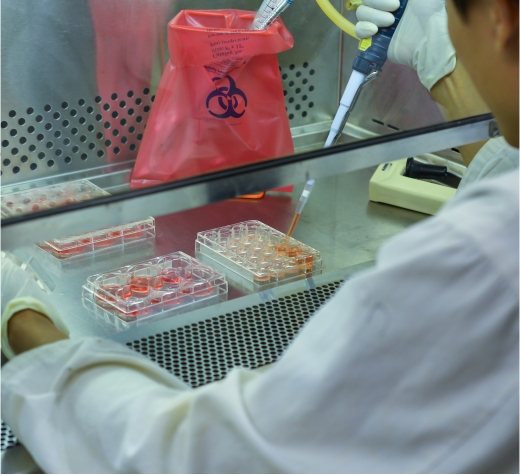
We offer various blood tests that can detect specific autoantibodies, which are proteins produced by the immune system that mistakenly target the body's own cells and tissues. Different autoimmune diseases are associated with specific autoantibodies, and their presence in the blood can provide valuable diagnostic information. Our comprehensive range of tests includes Antinuclear antibody immunofluorescence assay (ANA-IFA), Extractable nuclear antigens (ENA Profile), Antinuclear antibody (ANA) by ELISA, Anti-double-stranded DNA (anti-dsDNA), Antineutrophilic cytoplasmic antibodies (ANCA), Antimitochondrial antibodies (AMA), Autoimmune liver profile, Endomysial antibodies, Deamidated gliadin antibodies, Autoimmune encephalitis panel, Paraneoplastic syndrome profile, Rheumatoid factor (RF) and Anti-cyclic citrullinated peptide antibody (CCP), among many others. These tests are critical in the early detection and diagnosis of autoimmune diseases, such as systemic lupus erythematosus, rheumatoid arthritis, sjogren’s syndrome, multiple sclerosis, celiac disease, myositis, autoimmune hepatitis, primary biliary cirrhosis, and vasculitis.

Immunofluorescence tests are an important tool in the diagnosis of autoimmune diseases. These tests utilize fluorescent-labelled antibodies to detect the presence of autoantibodies in patient samples. By visualizing the binding patterns of these antibodies, healthcare professionals can identify specific autoimmune markers and aid in the early diagnosis and classification of autoimmune conditions. Positive immunofluorescence results need to be confirmed using additional tests, such as enzyme-linked immunosorbent assays (ELISAs) or line immunoassays, which can identify specific autoantibodies. We use advanced techniques such as multiplex assays that allows simultaneous detection of multiple autoantibodies in a single sample. These assays utilize a panel of different antigens to identify a wide range of autoantibodies associated with various autoimmune diseases. These tests offer increased sensitivity, specificity, and improved diagnostic accuracy.


